Technology
Inside Amtrak’s $821M Chicago rail yard project: Who’s behind it, and who’s paying?
By Sarah Lopez
Advertisement · Why this ad?
Nick Martinez is a public health reporter who earned his Master’s in Public Health from the University of Chicago. Having previously worked with ProPublica, he focuses on health equity issues affecting the Chicago community.
More from Nick →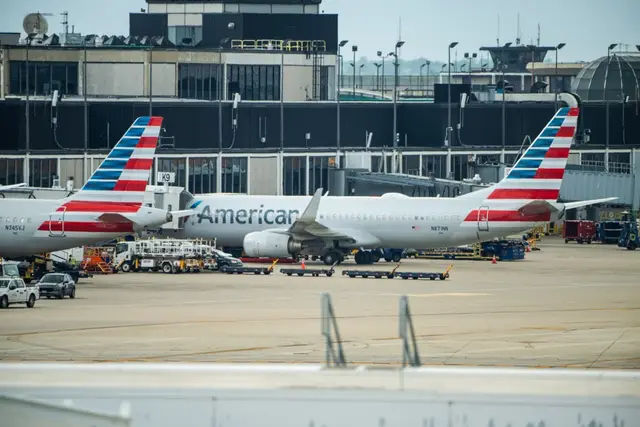
Nationwide air travel was brought to a standstill on Friday afternoon when the Federal Aviation Administration (FAA) issued a ground stop affecting all airports across the country. The move, prompted by 'communication issues impacting multiple Air Route Traffic Control Centers,' left travelers and communities in a state of uncertainty. Transportation Secretary Sean Duffy confirmed the ground stop, stating that FAA technicians were investigating the issue and that 'out of an abundance of caution, all flights have been halted.' This is the second time since 9/11 that a nationwide ground stop has been implemented, the last being in January 2023 due to a key FAA computer system failure. The previous instance in January 2023 involved a corrupted file within the NOTAM (Notice to Air Missions) system, which provides pilots with critical information about flight restrictions, airport conditions, and hazards. The disruption highlighted vulnerabilities in a system vital for aviation safety.
At Chicago's O'Hare International Airport, flights were experiencing delays averaging 47 minutes by 4 p.m., while at Midway, delays averaged 64 minutes. Approximately 20 flights had been canceled at both airports. The FAA initially reported an 'equipment outage' before clarifying that the issue stemmed from a 'temporary telecommunications outage.' U.S. Secretary of Homeland Security Markwayne Mullin stated there was 'no indication as of yet that this was a nefarious attack against us,' and reassured the public, “We were wanting to assure all the American people this isn't a safety to the American people or another 9/11.” Mullin’s comments were intended to alleviate fears and prevent panic, emphasizing that the situation was a technical issue rather than a security threat. The comparison to 9/11, while understandable given the scale of the disruption, underscored the gravity of the situation and the potential for widespread anxiety.
The ground stop affected all 22 regional air traffic control centers that direct planes en route between airports nationwide. These centers, strategically located across the country, are responsible for managing air traffic flow and ensuring safe separation between aircraft. A disruption at this level signifies a systemic problem impacting the entire national airspace system. According to the FAA advisory, all aircraft operators were told that airports were ground stopped and all departing traffic should remain grounded “until further notice.” Inbound flights were being managed on a case-by-case basis. Former United Airlines pilot and aviation expert Steve Arroyo likened the problem to a regional air traffic control communication outage in September that affected flights across the Northeast, emphasizing that such disruptions highlight the vulnerability of relying on outdated technology. Arroyo explained that such outages, while rare, are a direct consequence of the FAA's continued reliance on legacy systems that are increasingly difficult to maintain and upgrade.
The sudden halt in air travel left many residents of Chicago and the surrounding area scrambling to adjust their travel plans. Passengers on an American Airlines flight from Wichita to Chicago faced a one-hour delay before learning of the nationwide issue, with the airline initially citing 'air traffic conditions in Chicago' as the cause. A source with knowledge of the situation told NBC News that Reagan National Airport was at capacity, potentially leading to flight diversions for travelers already in the air. The ripple effects extended beyond those directly impacted by flight cancellations and delays. Businesses reliant on air cargo faced potential supply chain disruptions, and tourism-dependent industries braced for a downturn in travel. The incident served as a stark reminder of the interconnectedness of the modern economy and the fragility of global transportation networks.
Secretary Mullin’s reassurance that there was no indication of a nefarious attack aimed to quell public anxiety, contrasting the situation with the heightened fears following the 9/11 attacks. “Everybody's safe. There is no reason to be concerned about your loved ones if they're flying or anything like that,” he stated. The incident underscored the importance of robust and reliable air traffic control systems, prompting renewed calls for investment in modernization efforts. The reassurance was critical in preventing widespread panic and maintaining public confidence in the safety of air travel. The comparison to 9/11, while intended to provide context, also served as a solemn reminder of the potential consequences of disruptions to national security.
The ground stop highlighted the ongoing need to modernize the nation’s air traffic control infrastructure. Congress approved $12.5 billion last year to replace miles of old copper wires with fiber optic lines and gradually replace old radio systems at airports across the country. This modernization effort, known as NextGen, aims to transition the U.S. air traffic control system from a radar-based system to a satellite-based system, improving efficiency, safety, and capacity. However, officials estimate that another $30 billion will be needed to complete the work. The slow pace of implementation has been hampered by technical challenges, cost overruns, and political disagreements. The FAA’s reliance on aging infrastructure is not unique to air traffic control; similar issues plague other critical sectors, highlighting the need for sustained investment in national infrastructure.
Adding to the travel woes, O'Hare travelers also face potential delays this weekend as the CTA conducts Blue Line track work that will disrupt service in some areas. The CTA is advising riders to allow for extra travel time. This confluence of events – the FAA ground stop and the CTA track work – underscores the challenges facing travelers in the Chicago area. The Blue Line track work is part of a larger effort to modernize Chicago's public transportation system, but the timing couldn't have been worse for those attempting to reach O'Hare.
The FAA is working to resolve the communication issues and resume normal flight operations. Secretary Duffy emphasized, 'FAA technicians are investigating the issue. We will provide updates.' The investigation will likely focus on identifying the root cause of the telecommunications outage and implementing measures to prevent future occurrences. The incident serves as a stark reminder of the critical role of air traffic control and the need for continued investment in modernizing the nation’s aviation infrastructure. Passengers are advised to check with their airlines for updated flight information and allow ample time for travel. The long-term implications of this ground stop are likely to include increased scrutiny of the FAA's modernization efforts and renewed pressure from Congress to accelerate the implementation of NextGen. The incident also underscores the importance of redundancy and fail-safe mechanisms in critical infrastructure systems to mitigate the impact of unexpected disruptions.
By Sarah Lopez

By Mark Chen

By David Gonzalez
By Aaron Chen